Restu Bundah: The Retro Bold Script for Strategic Branding
In the crowded visual landscape of today’s market, a font is more than decorative text; it is a foundational design decision that directly influences perception, communicates values, and anchors your brand identity. For entrepreneurs, designers, and creatives looking to carve out a distinctive space, the strategic selection of type is paramount. This is where Restu Bundah enters the conversation.
Understanding the Strategic Utility of Restu Bundah
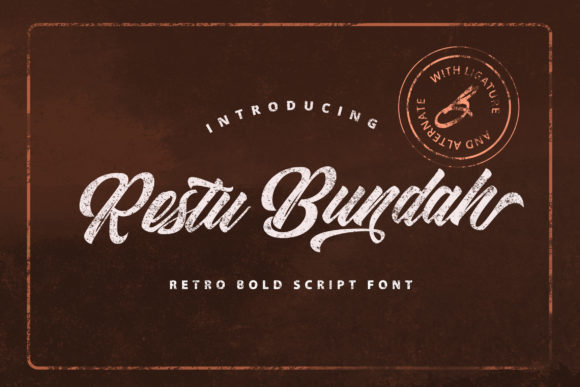
Restu Bundah is a retro bold script font characterized by a groovy, vintage-inspired aesthetic. Its assertive strokes and playful curves evoke a specific era and emotional resonance—one of confidence, authenticity, and unapologetic style. While many fonts are technically competent, the value of Restu Bundah lies in its powerful stylistic intent. It isn’t a neutral tool; it is a statement. Using it strategically means leveraging its inherent personality to align with and amplify your brand’s core message.
The practical utility of Restu Bundah becomes clear when we move beyond aesthetics and consider goals like positioning and customer connection. For a new business, establishing immediate recognition is crucial. A font like this acts as a visual shorthand, instantly communicating a vibe before a customer reads a single word. For established brands looking to refresh or target a niche, it can serve as a deliberate pivot, signaling a return to craft, a celebration of heritage, or a bold step into a more expressive market.
Planning Your Use: Goals and Context
Intentional use begins with clear planning. The first consideration is congruence: does the vintage-bold personality of Restu Bundah support your brand’s story and target audience? If your goals revolve around trust, tradition, handmade quality, or rebellious energy, this font can be a potent ally. However, if your communication needs require utmost neutrality or clinical precision, its stylistic weight may be a distraction.
Think about application scope. Restu Bundah excels as a primary brand font for logos, headlines, and key signage—areas where impact is the priority. Its strength in elevating projects like barbershop logos, motorcycle club patches, clothing labels, or coffee shop branding is evident because these contexts often benefit from a strong, attitude-driven visual anchor. Using it sparingly as an accent for secondary text can also be effective, creating a hierarchy where the retro style highlights the most important messages.
- Assess Brand Voice: Does your brand have a “voice” that is bold, nostalgic, or craft-oriented? Restu Bundah can give that voice a visual form.
- Define the Touchpoints: Plan where the font will appear—logo, packaging, website headers, social media graphics—to ensure cohesive customer experience.
- Consider Longevity: While retro is timeless, ensure the style aligns with a long-term brand vision, not just a fleeting trend.
Making Decisions for Communication and Creativity
Adopting a distinctive font like Restu Bundah also impacts internal processes. For creative teams, it sets a clear creative direction, reducing ambiguity and speeding up design decisions. For marketing communication, it provides a consistent tonal framework; copywriting can be developed to match the font’s confident, vintage feel, creating a unified message across all mediums. This thoughtful integration supports productivity by reducing friction between visual and verbal branding efforts.
From a learning perspective, studying the use of a font like this is an exercise in brand discipline. It teaches decision-makers about the importance of consistency and the psychological impact of design choices. For freelancers and small business owners, mastering the intentional application of a powerful typeface is a skill that elevates their service offering and results in more compelling client work.
Exploring Practical Use Cases and Applications
The versatility of Restu Bundah is best demonstrated through realistic scenarios. For a startup clothing brand focusing on vintage motorcycle culture, the font on a tag or web banner doesn’t just say the brand name—it embodies the culture itself, building immediate authenticity. A neighborhood coffee shop aiming to differentiate itself from corporate chains can use Restu Bundah on its exterior signage and menu boards to project a sense of handcrafted, community-focused identity.
In these cases, the font supports operational goals by creating a memorable brand asset that attracts the right clientele and fosters loyalty. For a blogger or publisher creating content around retro design, using Restu Bundah in headings strategically frames the entire content experience, telling the reader visually what the topic is about before they engage with the text.
- Primary Brand Mark: Use for logos and main business names where maximum impact and memorability are required.
- Featured Headlines: Apply to key headlines on websites, posters, or advertisements to capture attention and set tone.
- Product Accents: Incorporate on specific product labels or limited-edition items to denote special quality or heritage.
Risks and Considerations for Unclear Implementation
Without strategic grounding, the use of Restu Bundah can become a liability rather than an asset. The primary risk is misalignment. If the font’s bold, groovy style is applied to a brand with a completely incongruous message—say, a financial consultancy—it creates confusion and erodes trust. The dissonance between visual cue and service offering can make communication feel incoherent.
Another consideration is overuse. Employing such a stylized font for every single text element, including long body paragraphs or fine print, can lead to poor readability and visual fatigue. It might also dilute its power; if everything shouts, nothing stands out. Furthermore, reliance on a strongly stylistic font without a supporting brand narrative can make the design feel superficial or trendy, lacking the depth needed for long-term customer relationships.
The key is intentional restraint. Use Restu Bundah where it serves a clear communication goal. Pair it with complementary, more readable fonts for supporting text. Always ensure it is part of a holistic system, not a random decorative choice.
Approaching Integration for Long-Term Value
To harness the long-term value of Restu Bundah, approach it as a core brand component, not a temporary graphic. This means documenting its usage guidelines—size, color pairings, acceptable applications—just as you would for a logo. This protects brand consistency as your business grows and expands into new projects or platforms.
Test its application. Before full commitment, mock up key customer touchpoints—a business card, a website header, a social media post—to see how the font interacts with your other elements and how it feels in context. This practical step prevents costly redesigns later and ensures the font truly elevates your projects as intended.
Finally, remember that the ultimate goal is better results: clearer brand positioning, stronger customer recall, and more effective communication. Restu Bundah, with its vintage bold script style, is a tool that can contribute significantly to these outcomes when used with purpose and planning. By making an informed, strategic decision about its role in your visual identity, you move beyond mere aesthetics into the realm of intentional brand building.